Large-scale Cooperative Living in Berlin

What is the potential of collaborative housing to address the current housing crisis? I have begun work on a book that will explore different models of collaborative housing across Europe to answer this question. For this I am conducting research visits to several projects in different countries, interviewing residents, architects and cooperative representatives and seeing life in these physical spaces for myself. The different chapters of the book will focus on large cooperatives that are presenting important alternatives to financialized housing in cities in Germany and Switzerland; grassroots initiatives in Spain and Hungary where the cooperative model is relatively new; cooperatives in Vienna and Amsterdam that explicitly aim to bridge differences among residents; collaborative living projects in small towns and rural areas in the UK and France, and of course a chapter on student housing coops. Most recently, this project brought me to Nettelbeckplatz (NBP) in Berlin, a cooperative housing estate with a rich history that shows the possibilities, and challenges, of large-scale collaborative living in urban centres.

A neighborhood with a contested history
I make my way to NBP, in Berlin's Wedding district just three S-Bahn stops from the city's Hauptbahnhof, on a sunny September afternoon. The estate, which is home to about 500 residents, is owned by the housing cooperative Berliner Bau- und Wohnungsgenossen-schaft von 1892, better known just as 1892. It’s Berlin’s second-oldest housing coop, established over 120 years ago by a group of wealthy and well-connected upper-class reformers who wanted to provide better living and housing conditions for the working class, alongside paternalistic welfare improvement, ‘help for self-help’ and cultural uplift. Founding members included housing reform advocates and critics of urban land speculation, as well renown architect Alfred Messel, who designed its first buildings. His successor Bruno Taut designed two estates in the early parts of the 20th century that are today under UNESCO World Heritage status, showing the close connection between architectural and social forms of living that have guided 1892 since its beginning.
The square that gives the Nettelbeckplatz estate its name was recently renamed Martha-Ndumbe-Platz, in memory of a Black woman who lived in Berlin and was killed in the Ravensbrück concentration camp in 1944. The square’s former namesake, Joachim Nettelbeck, had been involved in the slave trade and the renaming is just one indication of the complex and contested histories embedded in Berlin's urban landscape. The Wedding district, which has long been associated with working-class life and radical politics, is no exception. During the late 19th century, major industrial companies established factories here, attracting thousands of workers who crowded into the notorious Mietskasernen (literally rental barracks) that had sprung up all over Berlin to accommodate the people who moved to the growing metropolis in search of work, making Berlin one of the most populated cities after New York and London. These densely packed apartment buildings, with their multiple dark inner courtyards, resulted in appalling living conditions. But they also housed workshops and small businesses and fostered close-knit communities, political organizations and a strong working-class identity. During the Weimar Republic, Wedding became a stronghold of support for socialist and communist parties, earning it the enduring nickname Red Wedding.

Today, the neighborhood is changing again. Turkish cafés, kebab shops and grocery stores sit alongside nineteenth-century apartment buildings, post-war housing blocks and newer condominium developments that show the increasing gentrification of the area. A former crematorium has been converted into a popular cultural centre that is attracting artists and other creative professionals to the area. Like in much of Berlin, graffiti covers many walls, and the square itself looks somewhat neglected despite the autumn sunshine.
From urban clearance to cooperative community
The NBP estate occupies a city block on the north-eastern end of the square. It has its origins in Berlin's First Urban Renewal Program, a controversial urban planning intervention instituted by the West Berlin government in 1963. Its policy of Kahlschlagsanierung or 'clear-cutting renovation', involved demolishing entire tenement blocks in several Berlin neighborhoods and replacing them with modern developments. Parts of the Wedding, which at that point were surrounded by the newly-erected Berlin Wall, were among them. Although the poor living conditions in theMietskasernen were widely recognized, critics argued that their wholesale demolition destroyed not only unhealthy buildings but also eradicated established forms of urban life, social relationships and neighborhood identities. These concerns were famously articulated by Wolf Jobst Siedler and Elisabeth Niggemeyer in their 1964 book Die gemordete Stadt (The Murdered City). In response, a new urban policy of more careful urban renewal that aimed to preserve and rehabilitate old buildings began in the 1980s.

It was too late for parts of Wedding however, where 1892 was contracted by the Berlin government to participate in its contested top-down urban clearance program. Between 1975 and 1982, it built a modern estate through a phased construction that allowed some residents of the old buildings to move into the new apartments rather than having to leave the neighborhood. The new houses featured more spacious, light-filled flats with balconies clustered around a shared courtyard and playground. It attracted many young families who were also interested in its cooperative ethos and community life, and only two years after the first residents moved in, they had established a resident committee, created communal facilities and begun organizing social activities.

However, in the 1990s and early 2000s, with aging residents, a neglected estate and decreasing interest in cooperation, NPB lost its character, in keeping with the general physical and social decline of the neigborhood. Formely located in the shadow of the Berlin wall, Wedding is now in the center of Berlin and exposed to changing urban dynamics following Berlin’s unification and the more market-oriented urban policies that replaced support for social and affordable housing. This prompted 1892 to embark on a new project of change, which, in marked contrast to the 1970s demolition, was focused on renovating and retrofitting existing buildings, combined with a careful extension that aimed to maintain and renew the estate’s physical infrastructure, generational dynamics and cooperative identity.
Renovation as an opportunity for reinvention
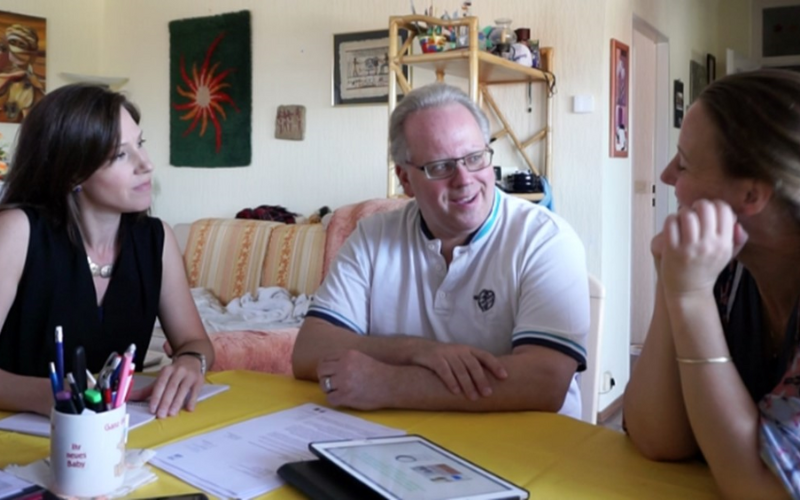
When I arrive at NBP, I am welcomed by Inge, a cooperative historian who co-authored 1892's centenary publication with the renowned German cooperative scholar Klaus Novy. She has also invited Monika, who has been working for many years for the cooperative's management team, and Ali, a long-term active resident who has recently been elected to the cooperative’s supervisory board (*all names have been changed). Sitting around a large table in the estate’s communal room, I learn more about the renovation and the changes it has brought. These combined retrofitting the ageing buildings to improve their environmental performance and modernizing living spaces to provide intergenerational housing and revitalize communal life.

As an anthropologist interested in collaborative housing, I am particularly curious about how residents were involved in the renovation process. Monika explains that the project team invited everybody to meetings about the proposed work. Interest was so high that larger meeting rooms had to be rented to accommodate all residents, who raised concerns about construction impacts, costs, changes to the estate's landscape and the loss of parking spaces. It took more concerted consultations and regular communication from the architects and 1892's CEO to develop residents’ trust in and support for the project. In the end, the consultations resulted in some modifications to the original plans, including additional communal facilities. Nevertheless, some residents would have liked more opportunities to participate directly in the design process, rather than primarily responding to proposals developed by professionals.
Ali recalls that the discussions led to a mixture of 'fear and hope,' with residents worried about the inevitable disruptions but also looking forward to improvements. Some used the opportunity to move into larger or smaller apartments as their family circumstances had changed, showing an important part of 1892’s intergenerational ethos that allows its members to stay in the coops' estates throughout their lives. This meant making physical changes to the built environment to support NBP's older residents, many of whom were still from the original 1970s generation and now needed adjusted features and extra support.
Creating space for different generations
Back at NBP, we are joined by Jens, the project's lead architect, who takes us on a tour of the estate. Before we leave the communal room, Ali proudly shows me a large-screen TV concealed behind sliding panels, used for watching the matches of the local football team and, more recently, children's film screenings. We then visit more shared facilities: a laundry, two gym rooms and a multipurpose space that can be used for yoga classes, table-tennis tournaments and other gatherings. A notice on the door advertises a new mother-and-baby group. These spaces provide the everyday infrastructure of cooperative living where residents meet, undertake activities together and develop the relationships that form the foundations of collaborative living.
One of the most innovative aspects of the renovation are the formerly open ground-floor areas, originally designed to encourage encounters between residents but becoming increasingly unsafe as the estate declined, which have been enclosed to create adjacent student studios and assisted-living accommodation for older residents. As cooperative members, students can remain in their flats after completing their studies for longer-term housing security. In the assisted-living complex, elderly residents have private bedrooms arranged around shared living and kitchen facilities managed by a professional care company. This allows even those older members with high care needs to remain in their familiar neighborhood. Otto points out the large windows, recessed from the street by big planters and benches and explains that they became particularly valuable during the COVID-19 pandemic, when relatives could visit loved ones while maintaining physical distance. The front of the flats is clad in corrugated iron, in a nod to the area's industrial history. However, like much of the neighborhood it is covered in graffiti, which is difficult to remove from the cladding. When I ask Jens about it, he shrugs and says 'this is Berlin.'

New living space was also created by converting a former parking garage into 44 new apartments, with projecting balconies that gives the new addition its distinctive look. The apartments range from artist studios to family-sized flats and include accessible accommodation. Altogether, the renovation created approximately 4,200 square meters of additional living space within the estate's existing footprint, largely preserving its open green areas. Costing close to €20 million, it was financed through a combination of the cooperative’s own equity, its members' financial contributions through cooperative shares and savings, and bank loans partly subsidized by German Development Bank. The project also won the City of Berlin’s Award for Experimental Housing Innovation Prize, which included subsidies of €1.2 million for the student and assisted living flats.

The result of these physical changes has been a revitalized intergenerational estate where families with young children live alongside older residents, while students and people with additional support needs have become part of its community. This creates its own tensions, as I discover the following morning when I meet Uwe, who heads the resident committee.
The everyday work of living together
Uwe’s third-floor apartment in one of the renovated buildings overlooks the courtyard, and flowers in their final summer bloom are gathered on the large balcony. We soon discover that we both grew up in East Germany, prompting a lively conversation about contemporary German and British politics before turning to NBP’s management. Uwe explains that one of the resident committee's responsibilities is maintaining good neighborly relationships. With people of different ages, backgrounds, interests and expectations living close together, disagreements are inevitable. One recurring issue is children playing in the courtyard, the noise of which sometimes bothers the older residents living on the ground floor. While such issues arise in any place where large numbers of people live together, it’s how they are addressed in cooperative housing that is interesting.
The resident committee works with 1892's 'social management' staff to address such issues before they escalate. This means managers like Monika playing an active role, and walking through the estate with her the previous day, it was obvious that many residents are on friendly terms with her. She regularly comes to the monthly Kaffeeklatsch organized by the resident association, where residents gather for coffee, cake and conversation with each other, members of the resident committee and 1892 employees like Monika. This presence, together with the social activities organized by the resident committee which also keep cooperative traditions such as the summer festival alive, provide opportunities for people to get together. Through such active maintenance and care cooperative ideas of solidarity and mutuality are given form and maintained. Both everyday encounters and social occasions facilitate the necessary negotiations, compromises and occasional conflicts. I learn that NPB has been known for its active cooperative participation since its beginnings in the 1970s, today shown with Ali's recent election to 1892's supervisory board, where 2 of its 9 members are now NBP residents.

The role of this board, which is part of 1892's governance structure, is to appoint the management of the coop and oversee its work. Housing cooperatives are democratically-governed organizations where residents as members of the coop have a say in what happens, although this does not mean that they participate equally in every decision affecting their homes. This is especially true for larger cooperatives like 1892 with its 15,000 members, where representations happens through elected representatives rather than direct democracy. When not everybody goes to meetings or participates in elections and only a small number of people put themselves forward for these mainly volunteer positions or become otherwise actively involved, channels of participation become narrow and democratic principles tenuous. While cooperative ownership creates opportunities for democracy and participation, how this works in practice remains an ongoing question, not only for 1892.
Another of the coop's feature is the longevity of many families; as Monika put it ‘man bleibt am Kiez’ meaning people stay here. As cooperative members they buy cooperative shares and pay monthly rents that are generally below comparable market rates. Some NBP apartments also benefit from public subsidies for lower-income households, students and older people. According to Inge, affordability is only part of 1892’s attraction, alongside long-term housing security and stable rents outside the speculative property market that has driven up housing costs all over Berlin. Little wonder that children of existing residents often become cooperative members and future residents. This generational continuity is both a strength and a limitation. It raises a dilemma for established housing cooperatives that provide secure, affordable homes for existing members but also want to make cooperative housing accessible to newcomers. Even with its 7000 apartments, the demand for new spaces is so large that 1892 has closed its waiting list, only admitting new members when a flat is actually available.
There is a corresponding debate in the academic literature about the potential for collaborative housing projects to become inward-looking and homogeneous, caring more about preserving low rents for its existing members than contributing to broader struggles for the right to decent and affordable homes and against the financialization of housing. This is often the more explicit aim of smaller, newer and more grassroots housing coops that also exist in Berlin and are supported through umbrella organizations like the Mietshäuser Syndikat. Successful coops like 1892, with their financial and other resources, can do more to support these emerging coops.
Sustainability beyond technology
An important element of the NBP renovation was retrofitting the existing housing stock, which happened through participation in DREEAM, an EU-funded research initiative exploring energy-efficient renovation at the scale of entire housing estates. This work included insulation of roofs and basements, replacement windows, more efficient lifts, upgraded electrical systems and new solar panels. According to DREEAM project documentation, as a result of these changes heating consumption fell by around 20%, which also meant reduced energy bills for residents. Some of them became more involved in the project through interviews, home visits and co-design sessions that explored how they understood energy consumption and what might encourage more sustainable behaviour. A group of volunteers became 'Green Neighbours' and received materials and training to help others save energy and water. This was supported through sophisticated measuring and display technology in the estate's common areas. However, when during our tour Ali shows me a screen intended to show daily energy consumption, it's black, no longer working. He acknowledges that the environmental program has lost momentum and needs to be more actively managed for people to stay interested and involved. This raises a familiar question in sustainability initiatives: what happens when the funding ends and the researchers leave? Technological improvements can be built into physical infrastructures, but changes in everyday practices require ongoing engagement and motivation - the same maintenance work that is necessary for cooperative solidarity to continue.
The past and present of 1892 and the NBP estate encapsulate several major transformations in Berlin's housing landscape: the destruction of nineteenth-century working-class neighborhoods, the optimism of post-war social housing, the changing politics of the reunified city and financialized housing markets, and current efforts to reconcile affordability with environmental sustainability. The NBP renovation has received international recognition, including a World Habitat Award, for its integrated approach to physical, social and environmental renewal. As I leave the estate, I can see what impressed the judges: careful architectural innovation, energy-efficient retrofitting, a renewed intergenerational housing community. But NBP also demonstrates the challenges of established and large-scale cooperative housing that is trying to balance individual needs and collective interests, democratic participation and professional management, the security of existing members and the inclusion of new ones.
I look forward to learning more about how these challenges are addressed in other collaborative housing initiatives across Europe in the coming months.


Comments